Sir Robert Menzies
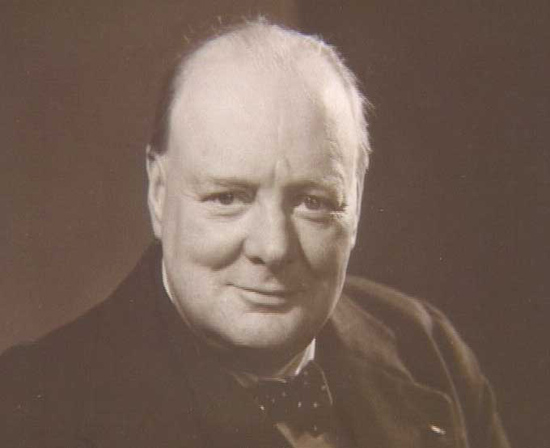
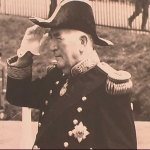 Attends the funeral of Sir Winston Churchill in St Paul's Cathedral. He is one of the 12 pallbearers to carry the coffin out and place it on a gun-carriage for the last stage of the funeral cortège in London.
- Menzies had a further task at Sir Winston's funeral and writes this description of it to Dame Pattie:
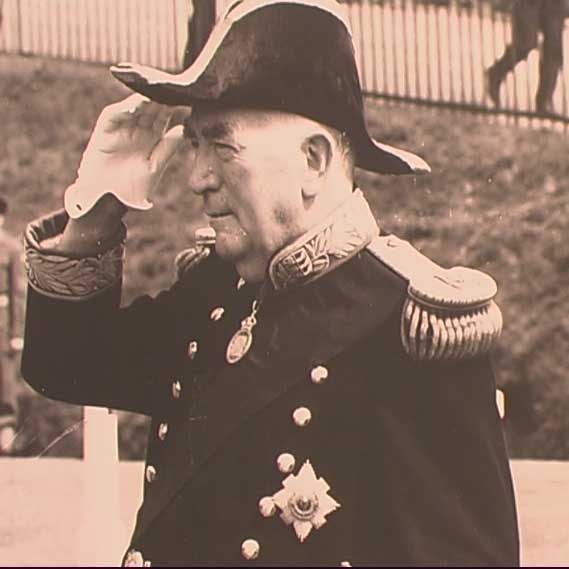
"After the coffin had departed and the Royal Family left, I by arrangement scuttled around the corner and down into the Crypt where, when my teeth stopped chattering, I made a talk about Winston which came over the BBC television as a sort of background to their pictures and description of the procession from the Cathedral to Tower Pier ... it was a rather weird experience to be sitting down in the crypt talking to a microphone which I had to clutch closely to my face because of the noise around me and I feared that my voice would come over in a rather distorted way. I had, of course, the previous night written what I was going to say because I was not actually on television but the voice came over."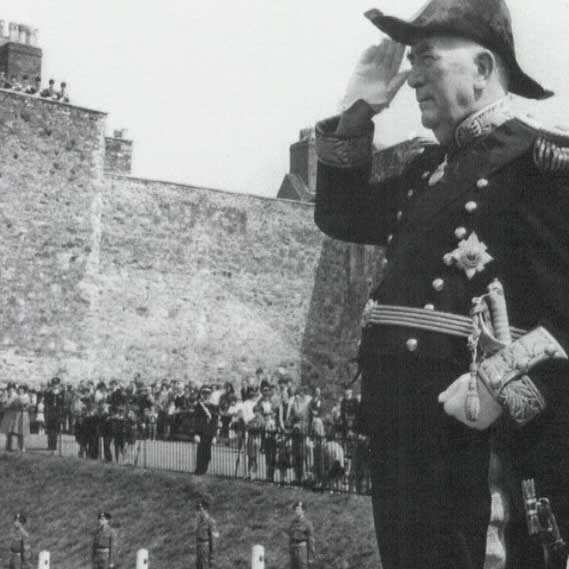
A W Martin, Robert Menzies A Life Vol 2 1944-1978, 1999 p 504.
† A Tribute by Sir Robert Menzies KT, CH, QC, MP
given on the occasion of the State Funeral of Sir Winston Churchill
January 30, 1965
- Appointed Lord Warden of the Cinque Ports:
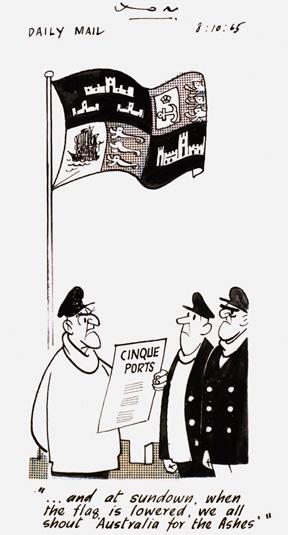
"... I was appointed by the Queen to succeed Winston Churchill as Lord Warden of the Cinque Ports and Constable of Dover Castle, and was installed at Dover. In this ancient office, which goes back to King Harold in 1066, and which, over the last two centuries has been occupied by such historic personages as William Pitt, the Duke of Wellington, Lord Palmerston, the Marquess of Salisbury, Lord Curzon, Lord Reading, the Marquess of Willingdon, and Churchill himself, a sense of continuity is inevitable. You almost see the procession of history. You know that you are in what has been the 'invasion area' of England for centuries."
Sir Robert Menzies, Afternoon Light, 1967 p 3.